

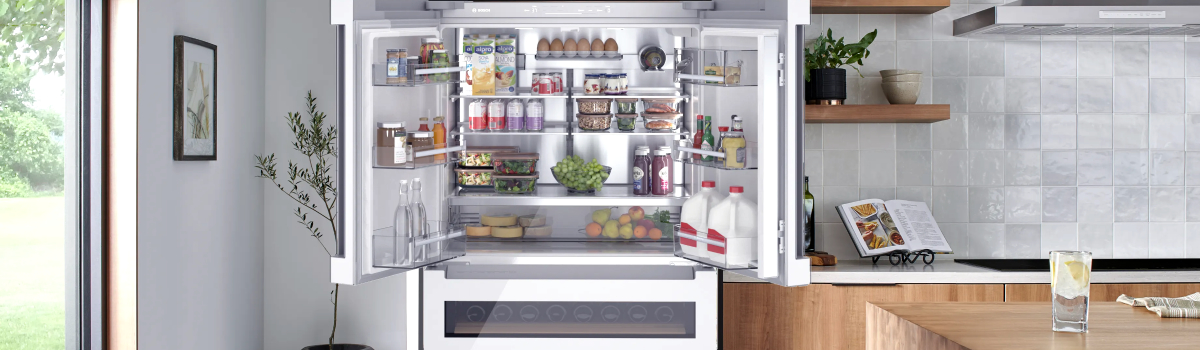
Seeing moisture, frost, or even a thin layer of ice inside your Bosch refrigerator or freezer compartment can be more than just annoying. It can affect food quality, air circulation, and efficiency. The good news: most of the time this isn’t a “your fridge is dying” situation. It’s usually air, temperature, or drainage control. Let’s walk through what’s really happening, what you can safely handle yourself, and when it’s time to get a technician involved.
Why you’re seeing condensation or frost in the first place
Your refrigerator is constantly trying to balance cold air (low moisture) with warm kitchen air (higher moisture). Any time warm, humid air sneaks inside, it can condense on cold surfaces as water droplets or freeze into frost.
That can happen in a few very common ways:
- The door isn’t sealing all the way, so humid room air is sneaking in 24/7.
- The fridge is overloaded or packed tight against the back wall, blocking internal airflow.
- The temperature settings are out of range, so either the fridge is running too cold or the defrost cycle can’t keep up.
- Meltwater from normal defrosting can’t drain, so it pools, refreezes, and becomes frost.
Moisture inside the compartment isn’t just cosmetic. Over time, heavy frost can choke airflow vents, force the compressor to work longer, and cause warm zones in places that should stay safe for food.
Step one: rule out simple air leaks
Before thinking about parts or defrost systems, start with the most basic but most common cause — a weak or dirty door gasket.
Check the gasket (the rubber seal around the door) all the way around. You’re looking for:
- Cracks, tears, or flattened spots
- Food residue, sticky film, or crumbs preventing full contact
- Sections that don’t sit flush against the frame
Wipe the gasket with warm, mild soapy water and dry it well. A clean, soft gasket can seal tighter. If you can close a thin piece of paper in the door and pull it out with almost no resistance in one corner, that corner isn’t sealing right — and that leak alone can be responsible for constant interior condensation or frost.
If the seal is damaged or badly deformed, that’s not something you “clean and move on.” That’s a replace-the-gasket situation.
Airflow and loading: are you suffocating the fridge?
Bosch refrigerators are designed for even airflow. When vents get blocked, cold air can pool and surfaces hit “freezing point” in the wrong places. That’s when frost starts forming on food, walls, or drawers instead of staying where it belongs (on the evaporator coil, managed by the defrost system).
Do a quick internal audit:
- Are tall containers or bags pressed directly against the back panel?
- Are drawers stuffed to the point where nothing can circulate around or through them?
- Are items leaning on or covering the interior air vents?
A healthy setup should leave some breathing room. You don’t need empty shelves, but you do need channels for air to move. Good airflow helps maintain stable temps, which means less condensation later.
Temperature settings that work (and ones that create frost)
If your fridge section is set way too cold “just to be safe,” you may actually be causing part of the problem.
As a rule of thumb:
- Fresh food compartment should sit around 37°F (about 3°C)
- Freezer should sit around 0°F (about -18°C)
Lower than that can make surfaces hit freezing instantly when humid air enters, which encourages rapid frost buildup. On the flip side, if temps run warm, the fridge may struggle to cycle properly and defrost moisture in a controlled way.
If you just changed settings, give the refrigerator a full 24 hours to stabilize before judging results. Don’t keep chasing the number every couple of hours — constant adjustment can actually make the machine cycle weirdly.
Situations where defrost and drainage matter
Your Bosch defrost system is supposed to melt light frost off the evaporator coils on a schedule. That meltwater is supposed to run down a drain channel, then out of the chilled area where it can evaporate safely.
If that drain tube clogs with food bits, ice, or biofilm, the water has nowhere to go. It sits, refreezes, and becomes chunky frost or weird ice sheets under drawers or on the back wall. That frost then forces air to reroute, which gives you warm spots and more sweating in other zones.
Signs you might have a drain or defrost issue:
- Puddles or thin ice sheets under the crisper drawers
- Visible ice buildup on the back wall of the fridge or freezer instead of just on the evaporator cover
- You hear “crunch” or “crackle” when the fan runs because it’s hitting frost
In those cases, a manual defrost is a valid first step. You can:
- Empty the compartment, move perishables to a cooler.
- Power off / unplug the fridge.
- Leave the doors open so the frost can melt naturally.
- Soak up meltwater with towels instead of letting it run everywhere.
- Once fully thawed, wipe the interior dry and plug it back in.
Do not chip ice with a knife or screwdriver — it’s very easy to puncture lining, tubing, or wiring, and that turns a nuisance into a major repair.
If frost returns quickly after a full manual defrost, that’s a sign the defrost heater, defrost sensor, or drain path needs service.
Quick DIY checklist (good to do before calling for repair)
Here’s what’s worth doing yourself:
- Clean the door gaskets and check seal tension.
- Reorganize so vents and the back wall aren’t blocked.
- Confirm fridge and freezer temps are in the recommended range, not “max cold.”
- Look for standing water, ice sheets, or clogged drain signs and, if needed, safely defrost.
- Make sure the unit has breathing room behind and above — the refrigerator should not be jammed hard into cabinetry with zero clearance.
Pay attention to habits, too. If people in the house like to stand with the door open thinking about snacks, or if groceries get loaded all at once with the door open for minutes at a time, that flood of warm air can cause repeated condensation that then freezes.
When it’s time for professional service
Even if you’ve done everything right, you can hit a point where the problem is inside the system, not just airflow or routine cleaning.
That’s the moment to bring in a technician if you notice any of these:
- Frost builds back fast — within a day or two — after you’ve already fully defrosted
- The door gasket clearly won’t seal and needs to be replaced
- You’re seeing water under the fridge or on the floor, not just inside
- The fan in the freezer or fresh food section is scraping ice or making a rattling/grinding sound
- Temperature alarms or fault codes keep coming back
At that stage, you’re usually looking at something like a defrost heater that isn’t energizing, a failed defrost sensor/thermistor, a blocked or damaged drain tube, or a circulation fan that’s iced up and can’t move air. Those are fixable, but they’re not guess-and-hope fixes — they need proper testing.
How to keep condensation and frost from coming back
This part is less about “repair” and more about living with the fridge in a way that supports it.
Keep it closed: Avoid leaving doors hanging open during unloading groceries. Cold air dumps out fast, humid air floods in fast, and that cycle is the main source of sudden fog and frost.
Keep it clean: Wipe gaskets regularly so they stay soft and seal well. A sticky or cracked gasket is like driving around with a car door not fully shut.
Keep it clear: Give the fridge breathing room in back and don’t block interior vents. Airflow is the difference between “everything is evenly cold” and “top shelf is sweating, bottom drawer is freezing lettuce.”
Keep it reasonable: Don’t run the fridge at “ice cold all the time” unless you actually need that setting. Ultra-low temps can create frost, not eliminate it.
And if you’ve done all of the above and you’re still getting mystery frost every week? At that point it’s no longer about wiping moisture. It’s about finding which component in the cooling, defrost, or sealing system isn’t doing its job — and that’s exactly when a trained tech should take over.
In short: condensation and frost inside a Bosch refrigerator are usually fixable without replacing the whole unit. Start with sealing, airflow, temps, and drainage. If buildup keeps coming back fast or you’re seeing pooling water, that’s your sign to get it diagnosed properly.
Leave a Reply