

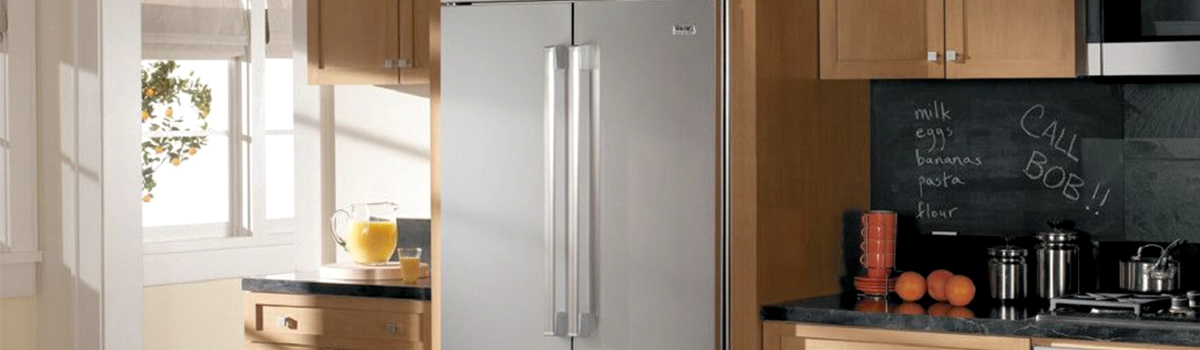
When the freezer in your Viking refrigerator won’t keep things rock-hard, it’s more than an inconvenience—it’s food safety, wasted groceries, and a lot of frustration. This in-depth guide explains the most common freezer-compartment problems on Viking units, how to diagnose each one, safe do-it-yourself fixes, and simple maintenance to prevent repeat failures. The style is straightforward and practical so anyone can follow along.
Before you start, unplug the refrigerator or switch off the dedicated breaker. Work slowly, keep track of screws and panels, and stop if you smell burning, see scorched connectors, or feel unsure about an electrical step.
Quick Orientation: How Viking Freezers Stay Cold
Your freezer gets cold when the compressor pushes refrigerant through the condenser coils (to dump heat) and then through the evaporator coils (to absorb heat inside the freezer). Fans move air across those coils. A thermostat/thermistor and control board tell everything when to run. If one link breaks—airflow, sensors, fans, or power—freezing suffers.
Tools & Supplies (keep it minimal)
- Multimeter with continuity function
- Soft brush and vacuum with crevice tool
- Phillips and flathead screwdrivers
- Work gloves and a flashlight
- Towels for meltwater
1) Condenser Coils
What’s going wrong
Dust-packed coils can’t shed heat. The system runs longer, food softens, and the compressor overheats.
Likely cause
Coils behind or beneath the unit collect lint and kitchen dust. Some Viking models have condenser coils sealed within the cabinet walls (no routine cleaning needed). If yours are accessible, they need attention.
DIY fix (simple)
- Disconnect power. Pull the unit out gently if coils are on the back; remove the toe-kick grille if coils are below.
- Vacuum and brush. Work carefully to avoid bending fins.
- Reposition and restore power. Listen for smoother, quieter operation.
Prevent it
Clean accessible condenser coils about every six months. Keep the area behind and under the fridge free of dust bunnies that get sucked in.
2) Start Relay (on the Compressor)
What’s going wrong
The compressor won’t start reliably, so the freezer never pulls down to 0°F.
Likely cause
A failed start relay or overload device can’t boost the compressor at startup. You may notice a burnt odor from the relay housing.
DIY fix (intermediate)
- Unplug first. Remove the small cover on the side of the compressor.
- Pull off the relay/overload. Check for rattling debris or burn marks.
- Continuity test. With a multimeter, test between the relay’s start and run terminals. No continuity or a burnt smell = replace the relay/overload as a matched set.
- Reassemble and power on. The compressor should start cleanly.
Prevent it
Good coil maintenance reduces compressor stress. Avoid frequent rapid on/off cycles—give the fridge a few minutes between power interruptions.
3) Temperature Control Thermostat (or Thermistor + Control, model-dependent)
What’s going wrong
Cooling never kicks in, or temperatures swing wildly.
Likely cause
A mechanical thermostat that doesn’t “click” at its highest setting may have failed. On electronic models, a faulty thermistor (temperature sensor) can mislead the control board.
DIY fix (basic to intermediate)
- Manual test. Turn the thermostat to Max. A distinct click suggests it’s switching. No click? It may be bad.
- Continuity test (mechanical). Remove and test for continuity while rotating through settings.
- Thermistor check (electronic). Inspect the sensor harness for damage and seated connectors. Resistance should change smoothly with temperature (ice water vs. room temp). If readings are open/short or erratic, replace the thermistor.
Prevent it
Keep food packages from pressing against the control area or sensor capillary/thermistor bulb. Don’t block air channels—stable airflow helps sensors read accurately.
4) Evaporator Fan Motor (inside the Freezer)
What’s going wrong
Cold stays trapped near the coils; the rest of the freezer warms up. You might hear intermittent squeals or silence.
Likely cause
A seized or shorted evaporator fan motor—or a stuck fan blade—prevents circulation.
DIY fix (intermediate)
- Open the freezer door. Press and hold the door switch; many units stop the fan when the door is open and resume when it’s “closed.”
- Listen and look. If the fan doesn’t spin with the switch pressed, check for ice buildup around the blade. Clear carefully with warm towels—no sharp tools.
- Spin test. If blades spin freely by hand but won’t run powered, test the motor for continuity. Replace the motor if open/shorted.
- Reassemble panels snugly. Air leaks matter.
Prevent it
Defrost problems (see Section 6) often freeze the fan shroud. Fixing the root cause of heavy frost prevents repeat fan failures.
5) Condenser Fan Motor (near the Compressor)
What’s going wrong
The compressor runs hot and long; cabinet sides may feel warmer than usual, and the freezer can’t maintain setpoint.
Likely cause
Worn motor bearings or an electrical failure stop the condenser fan from pulling air across the condenser and compressor.
DIY fix (intermediate)
- Power off and access the rear or bottom compartment.
- Finger-spin test. The blade should coast freely. If it binds or feels gritty, replace the motor.
- Continuity test. If the blade spins freely but the motor won’t run when powered, test the windings. Replace if no continuity or if the motor hums without turning.
Prevent it
Keep the rear compartment clean and vents unobstructed. Heat and dust shorten motor life.
6) Evaporator Coils & the Defrost System
What’s going wrong
A wall of frost builds on the coils. Air can’t pass through, and the freezer warms even though the compressor runs.
Likely cause
Something in the defrost system—heater, thermostat/defrost bi-metal, or timer/control—stopped working. Doors left ajar or torn gaskets also let in humid air that accelerates frosting.
DIY fix (stepwise)
A. Safely clear the frost to restore airflow
- Unplug the unit. Open the freezer, remove shelves and the rear panel.
- Melt frost using bowls of hot water and towels. Avoid hair dryers pointed at plastic; a warm, steady approach protects liners.
- Reassemble and restore power to buy time for deeper checks.
B. Test defrost components
- Heater: Disconnect and check for continuity. Open circuit = replace.
- Defrost thermostat/bi-metal: Should show continuity when the coil area is cold (below its close temperature). If it never closes when cold, replace it.
- Defrost timer or electronic control: On mechanical timers, rotate the shaft with a flathead until it clicks into defrost. If the heater energizes now, the timer likely failed to advance and should be replaced.
Prevent it
Check door gaskets for tears or gaps and ensure doors self-close. Don’t overpack the freezer—air must move across the evaporator face. Keep settings reasonable: Freezer 0°F, Fridge 37–38°F.
Other Freezer Symptoms to Consider
Soft ice cream but hard meat
This often means poor air circulation or a damper door issue on multi-evaporator designs. Make space for airflow near vents and confirm the evaporator fan is running.
Intermittent “works fine, then warms up”
Thermostat/thermistor wiring intermittently open, start relay overheating, or frost intermittently choking the coil. Inspect connectors for browning or looseness and re-seat harnesses.
Constant humming, frequent clicking
Compressor trying to start and failing—classic start relay/overload scenario. Replace the relay set and retest.
Smart Operating Habits that Protect Your Viking Freezer
Load smart. Leave a little space between packages and keep items away from the rear wall and top air outlets.
Close it with purpose. A gentle but firm push ensures the gasket seals. If doors re-open on their own, re-level the cabinet so it leans back slightly.
Defrost discipline. If you notice frost creeping across the back panel, address it early. A light frost today can be a solid block next week.
Room conditions matter. Extremely hot kitchens force longer run times; extremely cold rooms can confuse controls. Keep ambient temps within the refrigerator’s rated range.
Power stability. Avoid rapid power cycling. After unplugging, wait a few minutes before plugging back in to prevent hard starts.
When to Pause DIY and Call a Pro (no phone numbers—just guidance)
- You suspect a sealed-system issue (oily residue near tubing, warm freezer with compressor hot to the touch, or uneven frost pattern on the evaporator).
- Wiring is burnt or brittle, or you see arcing marks on connectors.
- The compressor runs constantly yet the freezer never reaches 0°F even after the airflow and defrost issues are fully resolved.
Sealed-system repairs require EPA- handling, specialized tools, and model-specific parts.
Quick Reference: Symptom ➜ First Things to Try
- Freezer warm, compressor quiet ➜ Check outlet/breaker, thermostat “click,” start relay.
- Freezer warm, compressor running ➜ Inspect condenser fan, clean condenser coils, check evaporator fan airflow.
- Heavy frost on back panel ➜ Defrost manually, then test heater, defrost thermostat, and timer/control.
- No airflow from vents ➜ Verify evaporator fan operation and clear ice around the shroud.
Final Check: Dial in the Settings and Verify
After any repair, give the refrigerator several hours to stabilize. Use a standalone thermometer: aim for 0°F in the freezer. Recheck the next morning to confirm the fix held and adjust food placement if needed.
With consistent coil care, good door seals, clear airflow, and quick attention to early frost, your Viking freezer compartment should stay dependable for the long haul.
Leave a Reply