

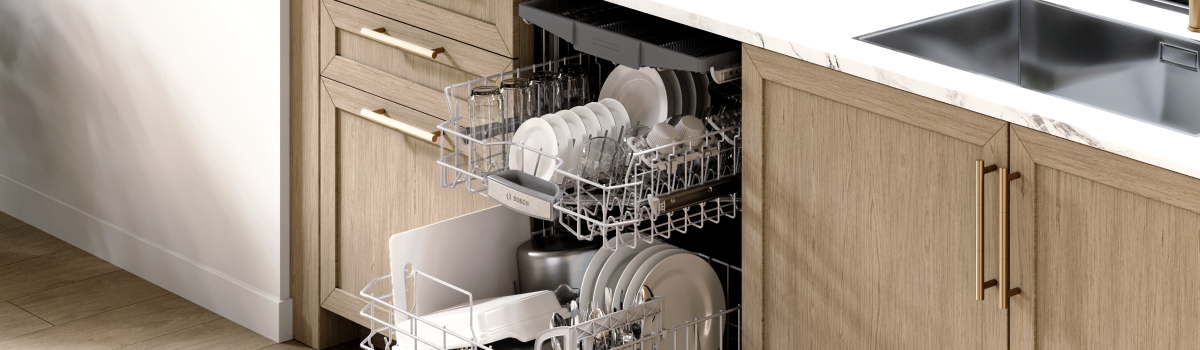
A Bosch dishwasher can’t clean well if the filters are clogged. Grease, coffee grounds, pasta bits—over time they settle into the coarse filter and microfilter, choking water flow and recirculating grime. The good news: cleaning the filter system is simple, safe, and extends the life of your dishwasher.
What this problem looks like
Dishes come out with a gritty film, glasses look cloudy, and you may notice standing water after a cycle. Sometimes the machine sounds louder than usual because the pump is working harder to push water through debris.
Why it happens
Bosch uses a fine filtration system so food doesn’t get re-sprayed onto dishes. When that mesh packs up with sludge or the coarse filter traps a wad of food, water circulation drops. Reduced flow means weaker spray pressure and slower draining—so soils stay behind.
Safety first
Unplug the dishwasher or switch off the breaker before you start. Let the machine cool if it just finished a hot cycle. Have a towel ready for moisture around the sump.
DIY fix: clean the Bosch filters the right way
Slide out the lower rack to expose the round filter assembly on the tub floor. Twist to unlock the coarse filter and lift it out. Rinse under warm water and use a soft brush to loosen sticky residue. Now lift the microfilter (the fine mesh cylinder). Rinse thoroughly—hold it up to a light; you shouldn’t see any dark patches stuck in the mesh.
While the filters are out, wipe the filter housing and the sump lip with a damp sponge. Spin the lower spray arm with one finger and check the tiny jets; if any look blocked, poke them clear with a toothpick and rinse. Reinstall the microfilter and then the coarse filter, twisting until fully seated. A loose or misaligned filter can allow debris into the pump, so make sure it locks firmly.
Quick checklist (keep it short)
- Coarse filter: unlocked, rinsed, brushed, re-locked snugly
- Microfilter: mesh fully clear when held to light
- Housing: wiped clean—no sludge on the lip
- Spray arm: jets clear; arm spins freely
- Test run: short cycle, empty machine, confirm strong spray and full drain
If water still pools after cleaning
A perfectly clean filter with poor draining points elsewhere. Check the drain hose loop under the sink—kinks, sags, or a clogged garbage disposal knockout can slow flow. Make sure the air gap (if installed) isn’t blocked. Finally, listen at the start of drain: if you hear the pump hum but no water moves, there may be debris lodged deeper in the sump or the pump impeller—this is where a pro inspection helps avoid damage.
Prevention that actually works
Treat the filter like an oil change—quick and regular. After a heavy, starchy, or seedy load (think rice, couscous, oatmeal), pop the assembly out and rinse it. Most households do fine with a monthly clean; busy kitchens or frequent pots-and-pans cycles may need bi-weekly attention. Avoid pre-rinsing plates spotless—Bosch detergents are designed to bind to light soil—but do scrape off bones, lemon seeds, and popcorn kernels that can wedge into the mesh.
Habits that keep filters clear
- Scrape, don’t pre-rinse: remove solids, leave a light film of food
- Run hot water at the sink for 10–15 seconds before starting a cycle
- Use quality detergent and keep rinse aid filled for better soil release
- Choose the right program: Heavy/Auto for baked-on loads, not Eco
- Once a month, run a hot maintenance cycle with a dishwasher cleaner
Signs you fixed it
You’ll hear a stronger, even spray during wash, no gurgling at drain, and the tub floor will be clear of standing water. Glasses should come out bright, not hazy, and plates won’t feel sandy to the touch.
When to get service
If filters are clean, the drain path is clear, and you still have weak spray or repeated standing water, the issue could be a failing drain pump, stuck check valve, or sensor-related flow problem. Intermittent error codes combined with poor circulation are also a clue. Continued use can strain the pump—schedule a technician to prevent a bigger repair.
FAQs
Where are the filters on a Bosch dishwasher?
At the bottom center of the tub: a round two-piece assembly (coarse filter + fine microfilter). Twist to unlock.
How often should I clean them?
For average use, once a month. After very dirty loads, give them a quick rinse the same day.
Can I use vinegar or bleach on the filters?
Warm water and a soft brush are plenty. If there’s greasy buildup, soak in warm soapy water. Avoid harsh chemicals that could damage seals.
My filter keeps clogging fast—why?
Typically heavy starches, coffee grounds, or seeds. Adjust loading habits, use the correct cycle, and check detergent quality and water temperature.
I cleaned the filters but still have odors.
Clean the door gasket and the lower door edge, wipe the sump lip, and run a hot maintenance cycle with a dishwasher cleaner to flush hidden residue.
Summary for busy readers
Clogged Bosch filters cause weak spray, cloudy dishes, and slow draining. Power off, remove and rinse the coarse filter and microfilter, wipe the housing, clear spray arm jets, and lock everything back in place. Keep them clean monthly (or after heavy loads), use the right cycle and detergent, and confirm the drain hose has a proper high loop. If performance doesn’t bounce back, the drain pump or internal check valve may need professional attention.
Leave a Reply