

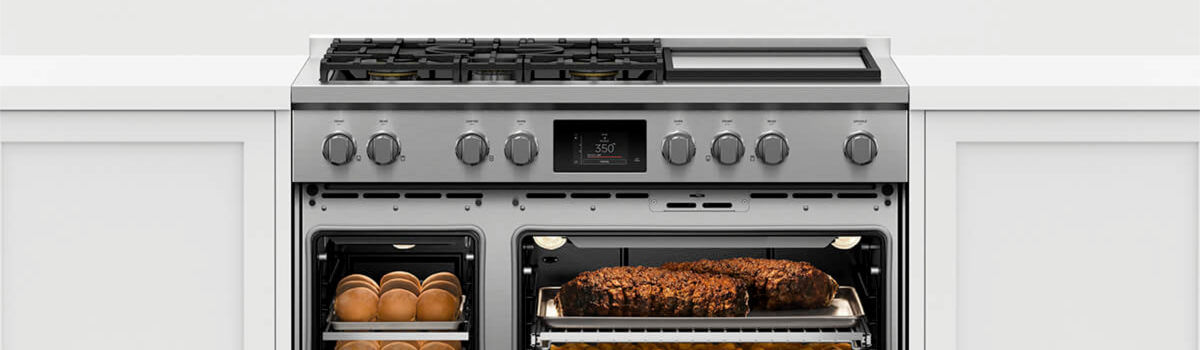
Fisher & Paykel ranges are known for sleek design and serious cooking power. But like any hard-working appliance, they can develop quirks—burners that won’t light, an oven that won’t hit temp, a broiler that acts shy, or a convection fan that suddenly gets loud. This guide walks you through the most common Fisher & Paykel range problems with plain-English explanations, safe DIY steps, and simple habits that prevent repeat issues.
Quick safety note: Always unplug the range or switch off the circuit breaker before removing panels. For gas, close the gas shut-off valve if you smell gas or need to disconnect a line. If you detect a persistent gas odor, stop and call your local utility emergency line.
Burner Won’t Ignite (Gas Models)
A burner that clicks but won’t light—or doesn’t click at all—usually points to moisture, debris, or a worn spark system. Everyday cooking spills are the number-one culprit.
What it looks like
You turn the knob, hear clicking (or not), get a weak flame or no flame at all, and maybe smell unburned gas briefly.
Likely causes (most to least common)
- Wet or clogged burner cap/ports from recent boil-overs
- Misaligned cap after cleaning
- Grease on the igniter tip, or cracked porcelain
- Failing spark module or ignition switch (less common)
DIY fix
Start simple. Lift off the grate and burner cap. Wipe moisture. Use a soft brush or a wooden toothpick to clear the small gas ports—no metal poking. Realign the cap so it sits perfectly flat. With power off, gently wipe the igniter tip with isopropyl alcohol on a cotton swab. Let everything dry fully, then test again.
Prevention, made easy
Wipe up spills the same day and always reseat burner caps after cleaning. Boil pasta on medium-high instead of full blast to avoid geysers.
Weak, Yellow, or Uneven Flame
When a flame turns lazy or uneven, combustion is off. The fix is often a quick clean and a cap realignment.
What it looks like
Yellow tips, dancing flame, or one side of the ring higher than the other.
Try this
Clean ports, reseat the cap, and confirm the grate sits flat. If you recently converted from natural gas to LP (or vice versa), make sure the correct orifices and regulator setting were used—improper conversion causes stubborn flame issues only a qualified technician should correct.
Keep it steady
Use a mild degreaser on caps and rings monthly. Don’t enlarge ports—just clear them.
Oven Won’t Heat or Takes Forever to Preheat
Electric elements and gas igniters wear with time, and door seals can leak heat.
Common symptoms
- Stuck at low temperature
- Long preheat times
- Foods undercooked at normal settings
Fast checks
- For electric: open the oven, turn it on, and look for the bake element to glow (back/bottom) and the broil element (top) to glow on preheat assists. No glow = likely failed element or relay.
- For gas: watch through the oven window—do you see the igniter glow and the burner light? An igniter that glows dull orange but never lights the burner is often weak and needs replacement.
DIY path
Verify you’re on the correct circuit (no tripped breaker). Inspect the door gasket for tears or flattened sections; a damaged gasket leaks heat and kills performance. Replacing a door gasket is straightforward on most models.
Prevent it
Avoid slamming the door, and keep the gasket clean with warm soapy water to maintain a tight seal.
Oven Temperature Feels Inaccurate
Thermostats drift and sensors age. An oven that bakes too hot or too cool can usually be calibrated.
What you’ll notice
Recipes that used to work now burn or come out pale; cookies spread oddly; center underdone while edges crisp.
At-home calibration (simple)
Pick up an inexpensive oven thermometer. Preheat to 350°F, wait 20 minutes after the preheat tone, then check. If you’re consistently off by, say, 20°F, many Fisher & Paykel ranges allow a user calibration (offset) in the settings menu. Apply a small offset and retest.
Pro tip to prevent surprises
When baking, give the oven a full extra 10–15 minutes after the preheat chime for walls and racks to saturate with heat. Opening the door less helps the thermostat stay honest.
Convection Fan Is Noisy or Not Spinning
Convection is a big reason people buy these ranges, so a noisy fan is frustrating.
What it sounds like
A scraping, humming, or rattling that gets louder with convection modes.
What to check
Remove racks and look for sheet-pan warping or foil flapping into the fan area. If noise persists, the fan blade could be loose or a seed/crumb wedged behind the cover. With power off, you can remove the rear fan cover inside the oven (typically a few screws) and vacuum crumbs—stay gentle.
Avoid the repeat
Don’t line the entire oven floor or back with foil; it disrupts airflow and can push debris into the fan path.
Broiler Doesn’t Fire
The broiler sees short, intense use—perfect conditions for residue and surface damage.
What you see
No glow or flame on broil mode, or broiler lights, then cuts out quickly.
DIY moves
Check that the door is fully closed (some models pause broil if the switch reads “open”). Make sure a pan or foil isn’t blocking the broil area. If electric, inspect the broil element for visible breaks or blisters. If gas, watch for ignition—no light may be an igniter issue.
Stay ahead
Use a broiler pan that keeps food off the element area and clean spatters soon after cooking.
Oven Shuts Off Mid-Cycle or Won’t Hold Temperature
Overheating protection, a failing sensor, or ventilation issues can cause random shutdowns.
How it behaves
The oven heats, then abruptly stops; it might restart later or throw an error.
What helps
Give the range proper breathing room per the install guide (front and rear vent paths clear). Check that heavy foil or oversized pans aren’t blocking rear vents. If it’s still happening, a temp sensor or high-limit thermostat may be erratic and needs testing/replacement.
Prevent this pattern
Keep vent slots clear and avoid stacking large pans against the back wall.
Cooktop Clicks Constantly (Even After Lighting)
Continuous clicking usually means the ignition switch is getting moisture or the spark harness is shorting.
Quick reality check
- Did you recently deep-clean or boil over? Moisture under the knob or around the switch can trigger endless clicks.
Easy fix
Kill power. Remove the knobs and lightly dry the area with a towel or a hair dryer on low, held far back. Once dry, restore power and test. If clicking returns instantly with a particular knob, that switch may be faulty.
Future-proofing
Spray cleaner on the cloth, not directly on the panel, to keep liquid out of the switch.
Error Codes on Display
Error codes are the range’s way of pointing you in a direction—temperature sensor, door lock, or power issues are common themes.
Good first steps
- Power cycle: turn the breaker off for 3–5 minutes, then back on.
- Check the door lock status after self-clean: if the lock won’t release after cooling, avoid forcing it—power cycle, then try a gentle open.
When DIY stops
Persistent codes after a power reset usually need a sensor check with a meter or a control diagnosis. That’s technician territory.
Oven Light Stays On / Door Won’t Close Right
A misaligned door or a tired gasket can trick the switch into thinking the door is open.
Simple checks
Look for racks blocking the door. Inspect hinge arms for bending after a heavy pan hit. If the gasket is torn or sagging, replace it; it’s a low-skill repair with a big payoff in heat retention.
Keep it tidy
Don’t store heavy cookware on open doors—it can tweak the hinges over time.
Self-Clean Problems (Lock Stuck, Smells, Residue)
Self-clean runs hot. If the lock sticks or the smell is intense, it’s usually about buildup or heat soak.
What helps
Let the range cool completely; the lock often releases as the sensor drops below its threshold. If it still won’t open, power cycle. For smells, do a routine manual clean with warm water and baking soda before the next self-clean—less carbon means less odor.
Smarter habit
Spot-clean spills after roasting; self-clean then becomes a “once-in-a-while” move, not a rescue mission.
Tripping Breaker or GFCI Issues (Electric or Dual-Fuel)
High-draw appliances and sensitive GFCI circuits can clash, especially in older kitchens.
What you can do
Confirm the range is on the correct dedicated circuit as required by the installation specs. If a portable GFCI strip is in the path—remove it. Frequent trips with nothing else on the line may indicate a wiring fault that needs an electrician.
When to Call a Professional
DIY has limits. Gas leaks, persistent electrical smells, visible arcing, scorched wiring, or repeated error codes after a reset warrant a professional. If you’ve done the safe checks above and the range still misbehaves, it’s time for a deeper diagnosis (igniters, elements, relays, control boards, or valve/regulator issues).
Simple Maintenance That Prevents Most Problems
Small habits keep a Fisher & Paykel range running like new.
Make these routine
- Wipe burner caps/ports weekly; reseat caps after cleaning so they sit perfectly flat.
- Keep the oven gasket clean and springy; replace at the first tear or flattening.
- Avoid foil over vents or the oven floor; it disrupts airflow and scorches parts.
- Give the oven extra soak time after preheat; stable walls = even bakes.
- Clean spills fast—sugars and sauces carbonize and stress igniters/elements.
- Verify clearances around the range so ventilation works as designed.
FAQ-Style Quick Hits (Short Answers, No Fluff)
Why does my gas burner light, then go out?
The cap may be off-center or ports are partially blocked, so flame doesn’t wrap the igniter. Clean and reseat.
Why is convection louder than before?
Likely debris near the fan cover or a loose blade. Clean behind the fan cover (power off) and retest.
Can I calibrate oven temperature myself?
Yes—many models allow user offsets. Verify with an oven thermometer and tweak in small steps.
Most Fisher & Paykel range problems start with everyday realities—spills, heat, and wear. A few careful cleanups, smart checks, and light calibration go a long way. If a burner won’t light, the oven won’t heat, or you see codes that won’t clear, use the steps above to narrow the cause. When the fix moves into gas valves, wiring, or control boards, bring in a pro to keep your kitchen safe and your range performing like it should.
Leave a Reply