

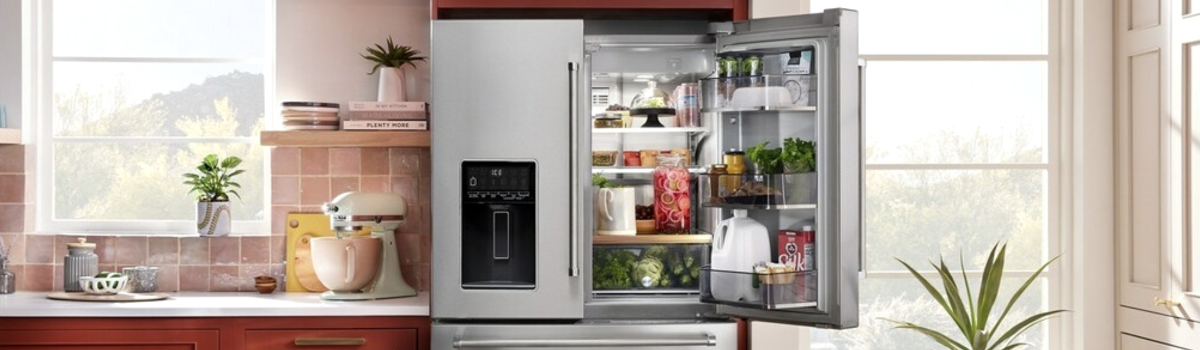
When a KitchenAid refrigerator starts growing frost like a snow globe—on packages, the back wall, or around the freezer door—you’re seeing warm, humid air meeting very cold surfaces. The trick is finding where that warm air is sneaking in or why moisture isn’t being carried away as designed. Below is a clean, practical guide written for everyday homeowners, with quick wins you can try before calling for service.
What “excessive frost” really means
A tablespoon of frost on a busy summer weekend is normal; thick, crunchy layers that keep coming back are not. Heavy frost warms the freezer, slows airflow to the fresh-food section, and can even jam drawers or the ice bin. Most cases boil down to door sealing, airflow, or defrost/drain issues—and they’re often fixable with simple checks.
First, a fast read on symptoms
If you notice moisture beads on top of the freezer gasket or water droplets along the center rail (mullion), you’re likely dealing with ambient humidity condensing right where warm room air touches cold metal. Many KitchenAid models include a Humidity/“Energy Saver” switch that controls a small mullion heater to keep that area dry. In humid months, you’ll usually want the heater ON (Energy Saver OFF). In drier seasons, you can turn it OFF to save power.
Smart DIY checks (no tools or just a towel)
Start with the basics—the quickest wins sit right at the door.
- Are doors truly closing?
Look for anything keeping the gasket from meeting the cabinet: a misloaded pizza box, a sticky jam on the seal, a protruding bin. Close a thin sheet of paper in several spots around the door; if it slides out with no resistance, the seal there isn’t tight. - How often and how long are doors open?
Every long hold-open pulls in a lungful of humid room air that becomes frost. During canning season or heat waves, expect a bit more frost—but it shouldn’t be building daily. - Is the mullion heater set correctly for your climate?
In muggy weather, switch Humidity control ON to warm the hinged seal and stop sweat/frost at the rail. - Any blocked vents inside?
Air must circulate to and from the freezer. Don’t park tall boxes in front of rear or side vents; keep a little space between items. - Are temperatures set to spec?
Aim for 0 to 5°F (-18 to -15°C) in the freezer and 37°F (3°C) in the fridge. Warmer freezers can’t clear moisture efficiently; colder isn’t always better if it triggers more humidity pull-in.
If frost is already heavy, clear it the right way
Avoid hacking at ice with tools—you’ll risk puncturing a liner or coil. Instead:
- Power down and prop the door to let frost melt naturally, or
- Manual defrost assist: unload perishables to a cooler, turn the unit off, place towels at the toe-kick, and let a fan blow room air into the freezer for 30–60 minutes.
- Check the drain channel under the evaporator cover once the ice softens. If you see a sheet of ice on the floor of the freezer, the defrost drain may be frozen. A turkey baster of warm (not boiling) water often clears it. Dry the area before restarting.
Common root causes (and what to do next)
Too many lists can be noisy, so here’s a short, focused set you can act on today.
- Door/gasket problems
Torn, flattened, or dirty gaskets leak warm air. Clean with mild soapy water; feel for the magnet pulling against the cabinet all around. If the hinge is sagging, the top of the door won’t seal—adjust or shim the hinge per model instructions. - Humidity condensation at the center rail
Turn Humidity/Mullion heat ON in humid months. If the control is already on and the rail still sweats constantly, the heater circuit or control may need a look. - Frequent or long door openings
Organize shelves so favorites are at eye level. Grab what you need, close the door, then re-open if necessary—short sessions beat one long “browse.” - Blocked airflow
Space items away from rear/side vents and the return duct (often near the bottom or back). Air needs a clear path, or the system overcools one spot while starving others, making frost worse. - Defrost system not keeping up
If frost returns quickly after a full manual defrost, the automatic defrost heater, bimetal/thermostat, or control may not be cycling correctly. That’s a parts-level diagnosis. - Water sources adding moisture
A leaky ice-maker fill tube, a door bin with a cracked container, or uncovered warm food can add a lot of moisture. Fix leaks and let hot food cool (covered) before loading.
Simple habits that keep frost away (and energy low)
Most of these take seconds and pay off for years.
- Match the season: Humid summer? Mullion heat ON. Dry winter? Try it OFF.
- Wipe gaskets monthly: A clean, supple seal closes faster and tighter.
- Level the cabinet: A slight forward tilt helps doors close by themselves.
- Load for airflow: Leave a little space around vents and tall packages.
- Mind the temp: Recheck setpoints after power outages or big grocery hauls; give the unit 24 hours to settle before judging performance.
- Drain health: If you once had a frozen drain, pour a small cup of warm water down the drain channel after a deep clean to confirm it’s open.
Quick “what-to-do-now” plan
If you’re staring at crunchy frost today, manually defrost, clear the drain if iced, clean and inspect gaskets, set freezer to 0–5°F, ensure vents are open, and enable the Humidity/Mullion heater if your climate is muggy. Watch it for 24–48 hours. If heavy frost returns quickly, you’re likely looking at a defrost component or door alignment issue that needs a deeper check.
Leave a Reply