

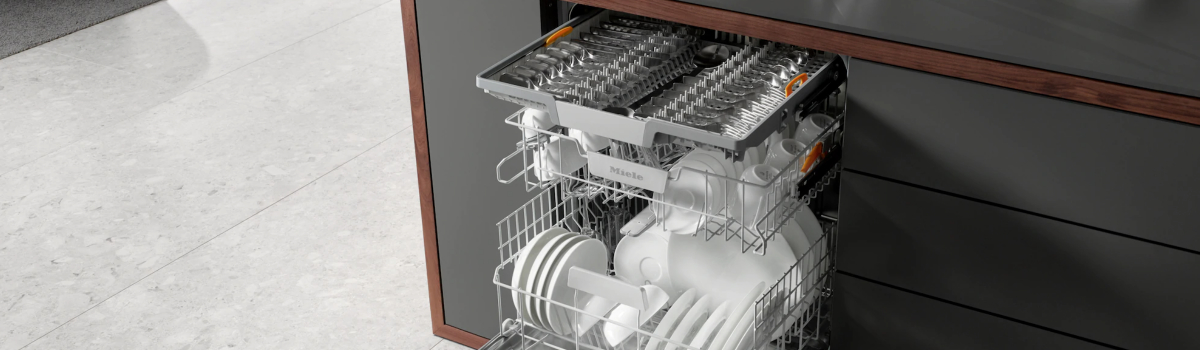
When a Miele dishwasher won’t drain, it throws off your whole kitchen rhythm—wet dishes, lingering odors, and a flashing drain light. The good news: most drainage problems come from a few predictable spots you can check safely at home. This guide explains what “no drain” really means, why it happens, how to fix it, and how to keep it from coming back.
How a Miele drain cycle should work
At the end of a wash, the control tells the drain pump to spin and push water through the sump, out the drain hose, through the air gap (if installed), and into the disposal or standpipe. If any piece of that path is blocked—or the pump can’t move water—you’ll see pooled water in the tub, hear the pump straining, or the cycle will stall.
Common reasons your Miele isn’t draining
Most issues are simple and mechanical rather than electronic:
- Filter and sump debris after a big, messy load
- A kinked or clogged drain hose, especially behind tight cabinetry
- A blocked air gap or disposal inlet sealed by a knockout plug after a new install
- Foreign objects in the drain pump impeller (olive pits, glass, labels)
- Less commonly: a faulty drain pump or damaged non-return valve
Quick checks before you dive in
Start with the easy wins. These take minutes and often solve the problem outright.
- Run the sink disposal for 20–30 seconds. If the dishwasher hose connects to the disposal and the inlet is blocked with food sludge—or the knockout plug wasn’t removed—water can’t leave the tub.
- Look for a kinked hose. Open the sink cabinet and trace the dishwasher hose. Sharp bends, heavy items pressing on it, or a low sag can stop flow.
- Open and sniff the air gap. Pop the cap (the small dome beside the faucet). If you see gunk or standing water, rinse it clean under the tap and reinstall.
If draining improves right away, you’ve found the bottleneck.
Step-by-step DIY: clear the filter and pump area
Unplug the dishwasher or switch off its breaker first. Water + electricity don’t mix.
Remove the bottom rack and lift out the coarse filter and fine filter assembly from the tub floor. Rinse them under warm water and a little dish soap; avoid harsh brushes that can tear the mesh. With the filters out, shine a light into the sump. If you see labels, seeds, or broken glass, fish them out carefully with tweezers.
Next, check the drain pump impeller. On many Miele models there’s a small access door or a removable cover near the sump. Open it gently. If the impeller won’t spin freely, something is jammed—remove the obstruction and rotate the impeller a few turns to ensure it spins smoothly. Reassemble the cover and filters firmly so they seal.
Run a Drain or Cancel/Drain command and watch for a strong swirl of water leaving the tub. If it empties cleanly, you’re back in business.
When the hose is the culprit
Not every blockage is inside the machine. If you suspect the hose:
- Detach the hose at the disposal/air gap and look for buildup at the nipple. Clean the fitting and confirm the disposal’s knockout plug has been removed (new installs often forget this).
- If you can access the rear or side of the dishwasher, check for crushing or sharp bends from the cabinet cutout. Straighten the run and secure it so it can’t collapse again.
After reattachment, run a short cycle and confirm a strong, continuous drain.
Signs it’s time for a new pump or a pro diagnosis
If the tub remains full and you hear only a faint hum (or nothing at all) during drain, the drain pump may be seized or failed electrically. Other clues include repeated stall-outs even with clean filters, or water that drains only after you manually bail the tub. At that point, replacement of the pump or non-return valve is the right path and prevents control board stress from repeated faulting.
Simple habits that prevent future drain problems
You don’t need to baby a Miele—just keep a few routines:
- Rinse the filter every week or two, more often after starchy or seedy loads.
- Keep the air gap clear and the hose run smooth; avoid storing heavy cleaners or bins that press on the hose under the sink.
- Mind labels and small items. Remove jar labels and keep loose utensils out of the sump area so they don’t migrate to the pump.
- Use rinse aid and hot water. Starting the sink hot before a cycle helps detergent dissolve and keeps residue from congealing along the drain path.
- Run a monthly cleaner/descale (especially in hard-water areas) to reduce film that can trap debris.
Quick action plan
- Run the disposal, clear the air gap, and straighten the hose.
- Clean the Miele filters and inspect the sump; free the pump impeller if jammed.
- Test a drain cycle. If it still won’t empty and the pump barely moves water, plan for a pump or valve service.
With a calm, methodical pass through the filter, sump, hose, and air gap, most Miele dishwasher drainage problems are easy wins. Tackle the simple checks first and you’ll usually restore a strong, quiet drain—and a kitchen that runs on time again.
Leave a Reply