

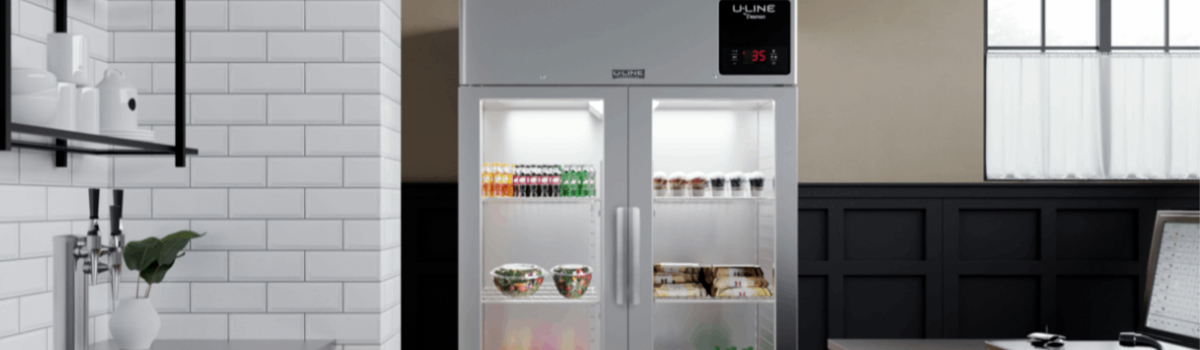
When a U-Line refrigerator stops defrosting, frost creeps over the evaporator, airflow drops, and temps start to drift. Drinks aren’t cold, produce wilts, and you may even see ice building up behind the back panel. This guide breaks down what “not defrosting” really means, why it happens on U-Line undercounter units and beverage centers, how to safely troubleshoot it at home, and the best habits to keep frost from coming back.
What the Defrost System Actually Does
Modern U-Line refrigerators use automatic defrost. Several times a day, the control board pauses cooling and energizes a defrost heater wrapped around the evaporator coil. A sensor (thermistor) and a safety thermostat make sure the coil warms just enough to melt frost without overheating. Meltwater runs through a small drain into a pan where it evaporates.
If any link in that chain fails—sensor, heater, safety thermostat, control logic, fan control, or the drain itself—frost wins.
Quick Symptoms You’ll Notice
- Thick frost or a solid ice blanket on/behind the rear interior panel
- Louder fan noise or “whirring” that comes and goes as blades hit frost
- Warmer temps in the refrigerator section while the compressor runs a lot
- Water under bins or a sheet of ice on the floor of the compartment
Prefer text? If the back wall looks snowy or the fan sounds like it’s scraping, you likely have a defrost issue.
Common Reasons a U-Line Won’t Defrost
Normal moisture plus door habits
Frequent, long door openings (or a leaky door gasket) pull humid air inside. That humidity condenses and freezes on the coil faster than auto-defrost can clear it.
Blocked defrost drain
A crumb or mineral scale in the tiny drain hole freezes the channel. Ice then stacks up around the drain and spreads.
Defrost heater failure
The heater can burn out like a light element. When it does, the control can “ask” for defrost all day and nothing melts.
Defrost sensor/thermistor or safety thermostat fault
If the sensor misreads temperature, the board may never trigger defrost—or it might shut off too soon. The high-limit thermostat can also fail open and break the circuit.
Evaporator fan issues
A fan that slows or stops won’t move air across the coil, so frost concentrates faster. Sometimes frost itself stalls the fan, which becomes a loop.
Control board or defrost timer logic (model-dependent)
Newer U-Line units use an electronic control; older or specific models may rely on a timer. If logic hangs or contacts fail, defrost cycles don’t happen.
Safe DIY: What You Can Do Now
Start with the non-invasive steps. These help most frost-ups and don’t require parts.
1) Power-cycle reset
Unplug the unit (or switch the dedicated breaker) for 5 minutes, then restore power. This can clear a stuck defrost sequence on electronic controls.
2) Gentle manual defrost (no sharp tools)
- Remove food, unplug the refrigerator, and open the door.
- Place towels at the toe-kick and a tray inside.
- Let the unit sit with the door open until all ice melts. To speed it up, place a bowl of hot—not boiling—water inside and replace the water as it cools.
- Never chip ice with a knife or screwdriver; puncturing a sealed system is catastrophic.
3) Clear the defrost drain
- Find the drain hole beneath or behind the evaporator cover (often a small opening at the back/center of the compartment).
- Use a turkey baster to flush warm water through the hole until it flows freely into the pan.
- A pipe cleaner or flexible nylon brush can dislodge debris. Avoid metal wires.
4) Check door seals and leveling
- Close a sheet of paper in several spots around the door. If it slides out easily, the gasket may be warped or the door is misaligned.
- Lightly clean the gasket with warm soapy water; dry it and apply a thin film of food-grade silicone to keep it supple.
- Make sure the unit is level and the door self-closes instead of drifting open.
5) Give it breathing room
Undercounter models need ventilation. Clear dust from the toe-kick grille and make sure cabinetry cutouts match U-Line’s airflow specs. Poor airflow raises humidity and shortens defrost intervals.
After these steps, plug the unit back in, set your target temps, and let it stabilize for 12–24 hours. If frost returns quickly or the fan still scrapes ice, continue below.
Deeper Checks (For Confident DIYers)
If you’re comfortable with a multimeter and basic safety, these tests can confirm a failed part. Always unplug the refrigerator first.
Accessing the evaporator area
Remove shelves and the rear interior panel to reveal the evaporator coil, heater, wiring to the sensor/thermostat, and the fan.
What to test (power off, components disconnected):
- Defrost heater continuity — Most should read a few dozen ohms; “OL” (open) means it’s burned out.
- Defrost thermostat/safety — Often closed (near 0 ohms) when cold; if it never closes on a cold coil, it won’t allow heat.
- Thermistor (sensor) resistance — Compare measured resistance at known temperatures to a U-Line service chart for your model. Way-off values indicate a bad sensor.
- Fan spin and play — Spin by hand; it should be free and quiet. Excess resistance or wobble means replacement.
If any component fails continuity or is out of spec, replacement is the fix. If all components test good but defrost still never triggers, the control board (or timer) is suspect.
Note: Model-specific panels may offer a “forced defrost” mode. If your user manual shows a button sequence to start it, run the test: the heater should get warm, the coil should sizzle, and frost should melt. No heat during a forced cycle points back to the heater circuit.
When to Stop and Call a Pro
- You see oily residue on copper lines (possible refrigerant leak).
- The evaporator never frosts evenly after a full manual defrost (weak sealed system).
- The control board shows fault codes you can’t clear, or forced defrost won’t energize the heater even with good continuity.
- You’re unsure about live-voltage tests—skip them.
It’s better to pause than to risk damage to a sealed system or electronics.
Preventing Frost Comebacks
A few small habits keep U-Line refrigerators defrosting smoothly.
Every 1–2 months
- Vacuum the toe-kick and condenser area to restore airflow.
- Wipe the door gasket and check for tight contact, especially at corners.
Every season
- Inspect the defrost drain with a flashlight; flush with warm water if you see residue.
- Re-level the unit if floors have settled so the door seals firmly.
Daily use
- Keep door openings short and deliberate—especially on humid days.
- Let hot leftovers cool before loading; steam becomes instant frost.
- Avoid blocking interior vents with tall bottles; clear airflow helps even defrosting.
Installation details
- Confirm cabinetry cutouts and toe-kick clearances meet U-Line’s spec for your model.
- If the unit sits in a very damp area (pool house, coastal kitchen, basement bar), a small room dehumidifier nearby can dramatically reduce frost load.
Short Troubleshooting Map (Text Version)
- Frost returns fast after reset → Clear the drain, check the gasket, verify airflow.
- Fan ticks or grinds → Defrost fully, then confirm fan spins freely; replace if noisy or tight.
- No melting during forced defrost → Test heater and safety thermostat; replace failed part.
- All parts test OK → Suspect the thermistor or control logic.
“Not defrosting” is usually a chain reaction: a little extra humidity, a partially blocked drain, or a tired gasket lets frost build until the fan stalls and temperatures drift. Start with the easy wins—full manual defrost, drain flush, gasket check, airflow—and only then move to part testing. With a steady approach, most U-Line defrost issues can be cleared and kept from coming back.
Leave a Reply